PRE/POST BQE
In Fall 2020, I was a fellow with the Institute for Public Architecture’s Fall Fellowship Residency: To Be or Not to BQE. The project begins to ask the question - can we meet the economic and social needs of humans while providing for a re-introduction of pre-colonial ecologies?

Along with my teammate John Vogt, I envisioned the void left by the BQE filled by a reintroduced forest ecology informed by the ecologies that existed prior to the city’s development. However, the BQE passes through extremely diverse communities with vastly different needs and physical characteristics. The BQE’s physical relationship to the neighborhoods it passes through informs the development of different strategies for reintroducing human and natural ecologies after it is removed.
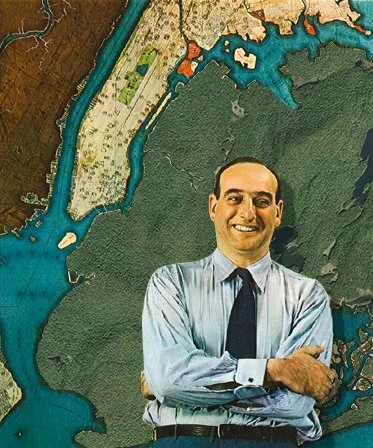
If it involves car-centric urbanism fucking up New York City, chances are this guy had something to do with it.
The task was to imagine what we could do if the BQE didn’t exist tomorrow. To do so, we started by looking back at what existed before the BQE. This ultimately took us back to long before Robert Moses.
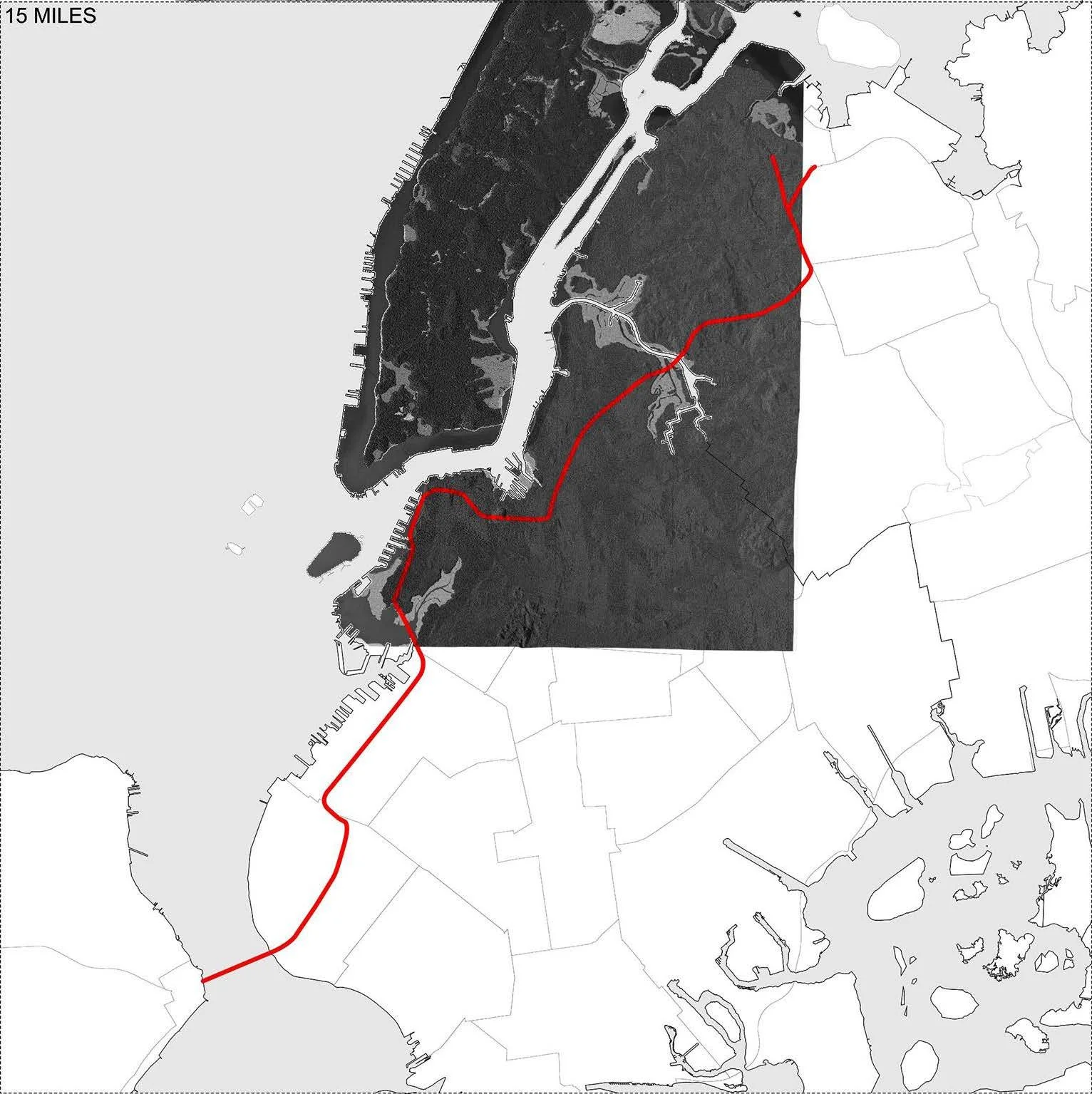
The path of the BQE mapped over Eric Sanderson's "Mannahatta" map of 1609 New York
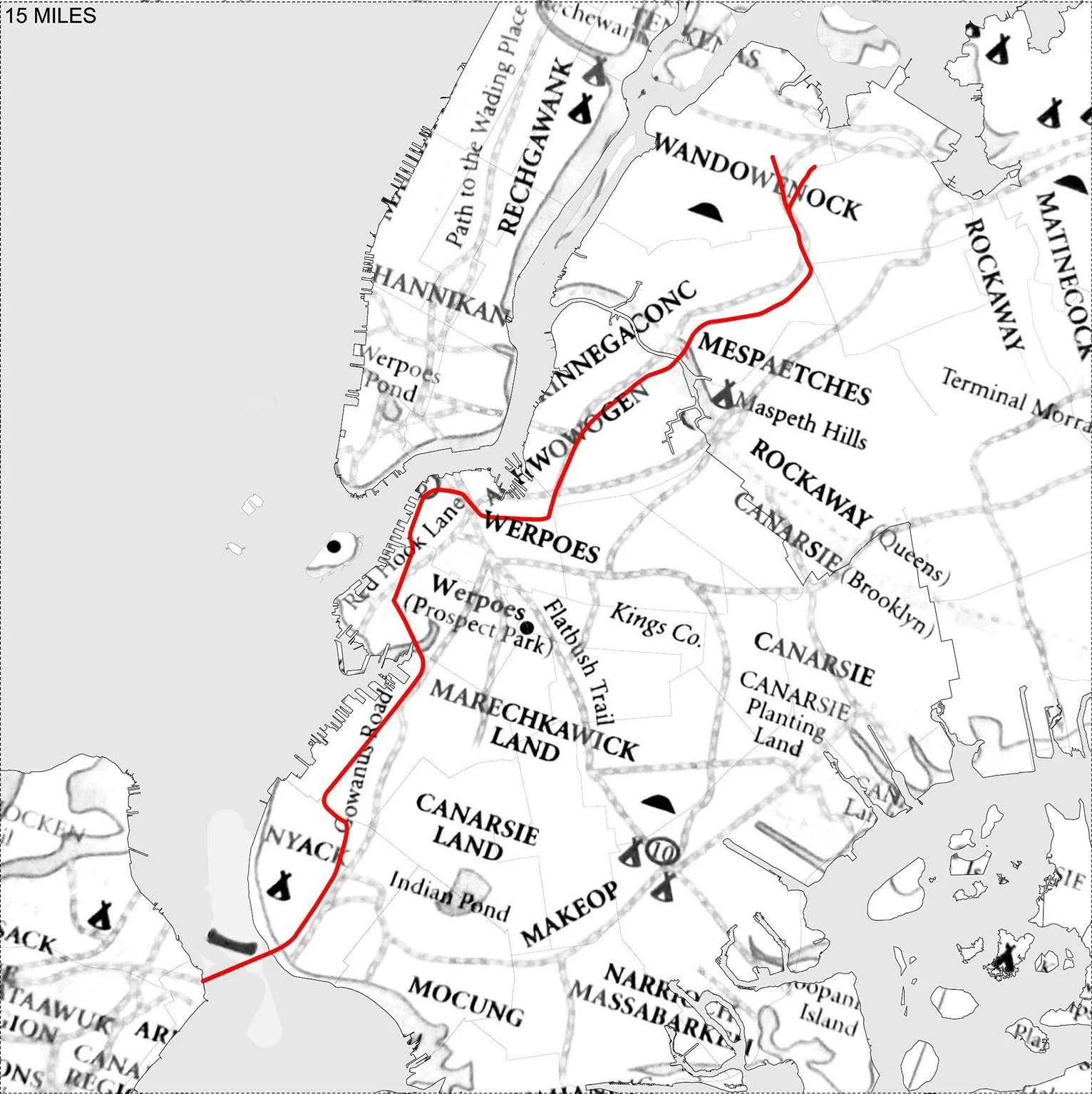
The path of the BQE mapped over Evan Pritchard's First People's map from "Native New Yorkers"
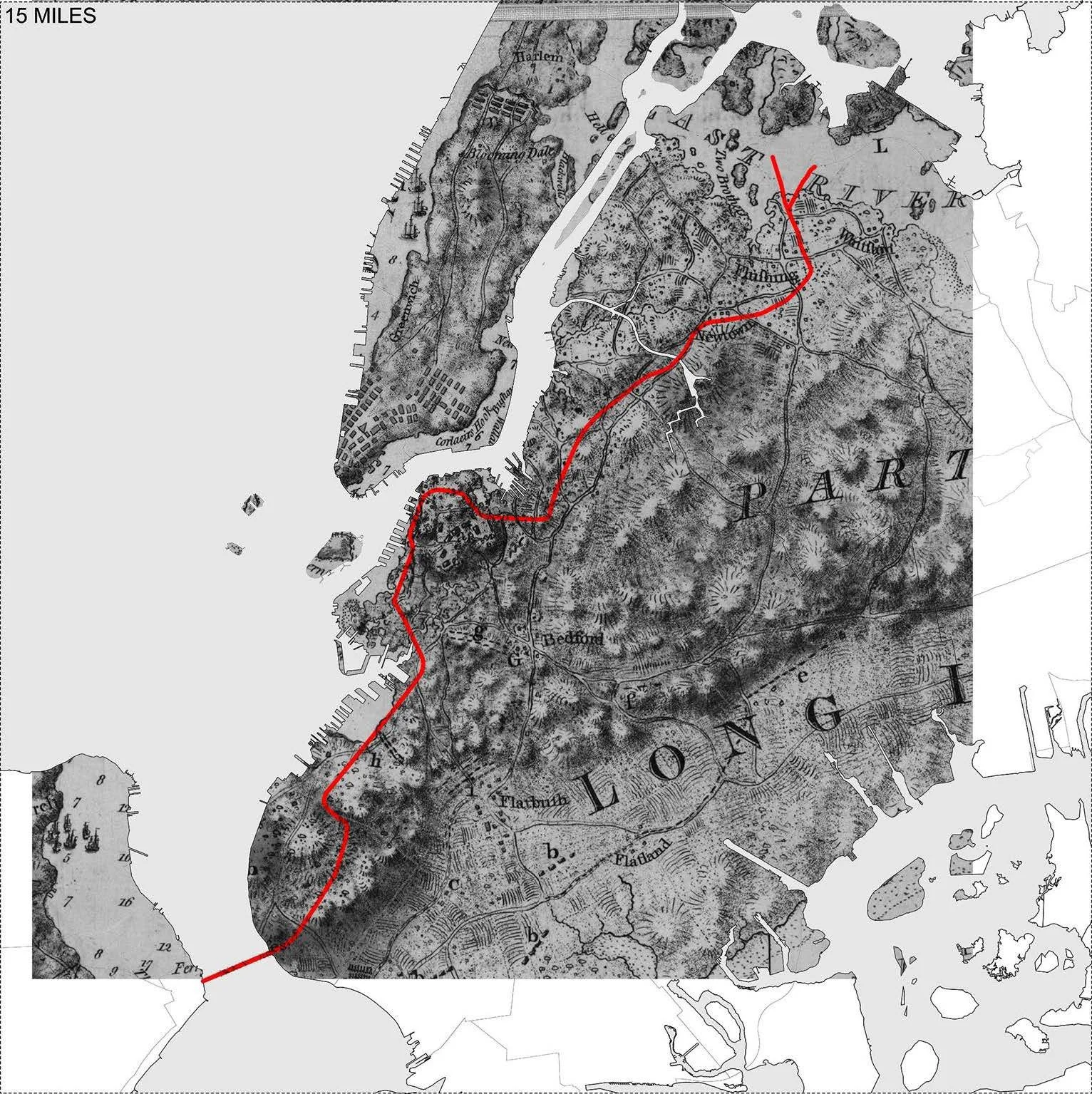
The path of the BQE mapped over a British Army topography map from 1777
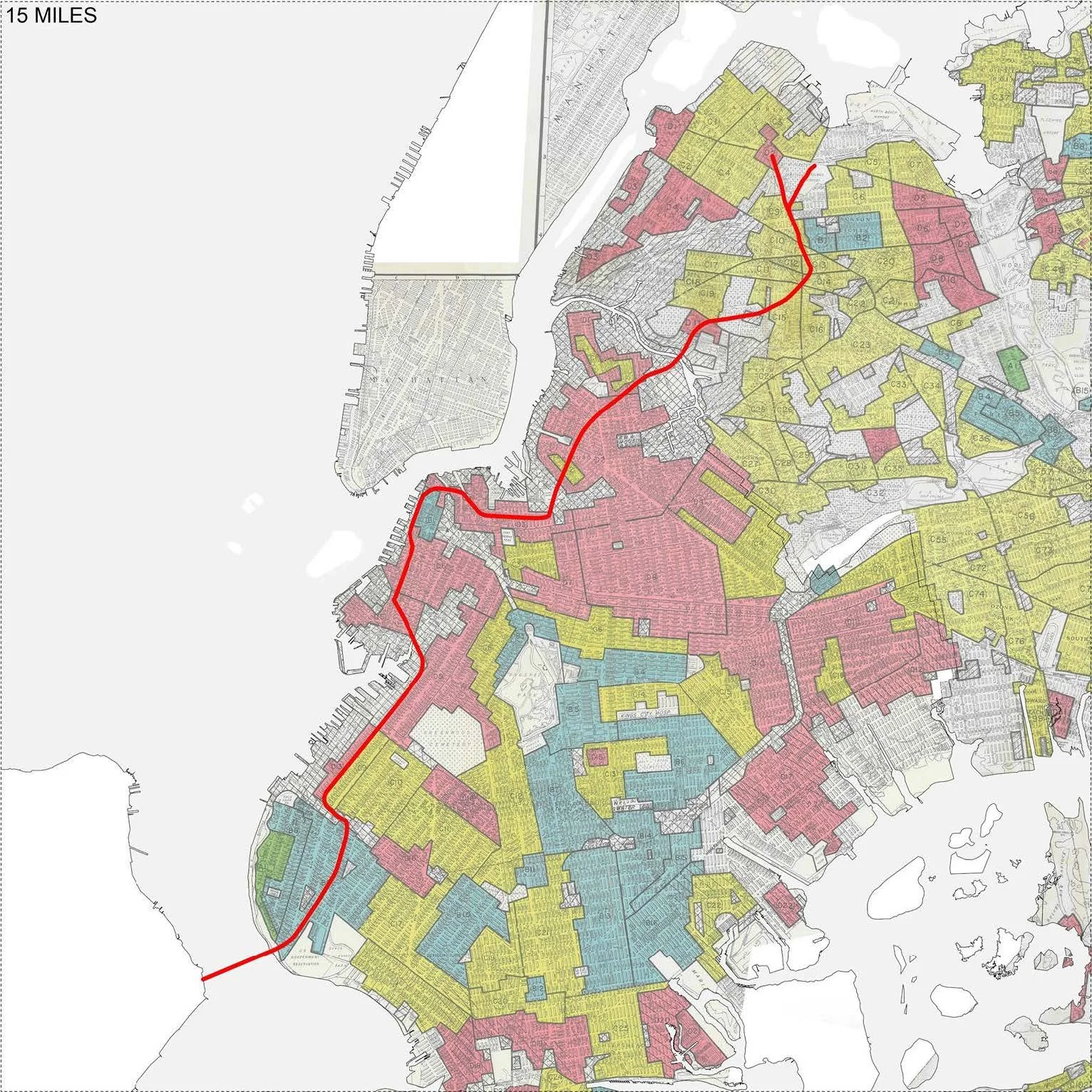
The path of the BQE mapped over the infamous HOLC "redlining" maps of Brooklyn and Queens
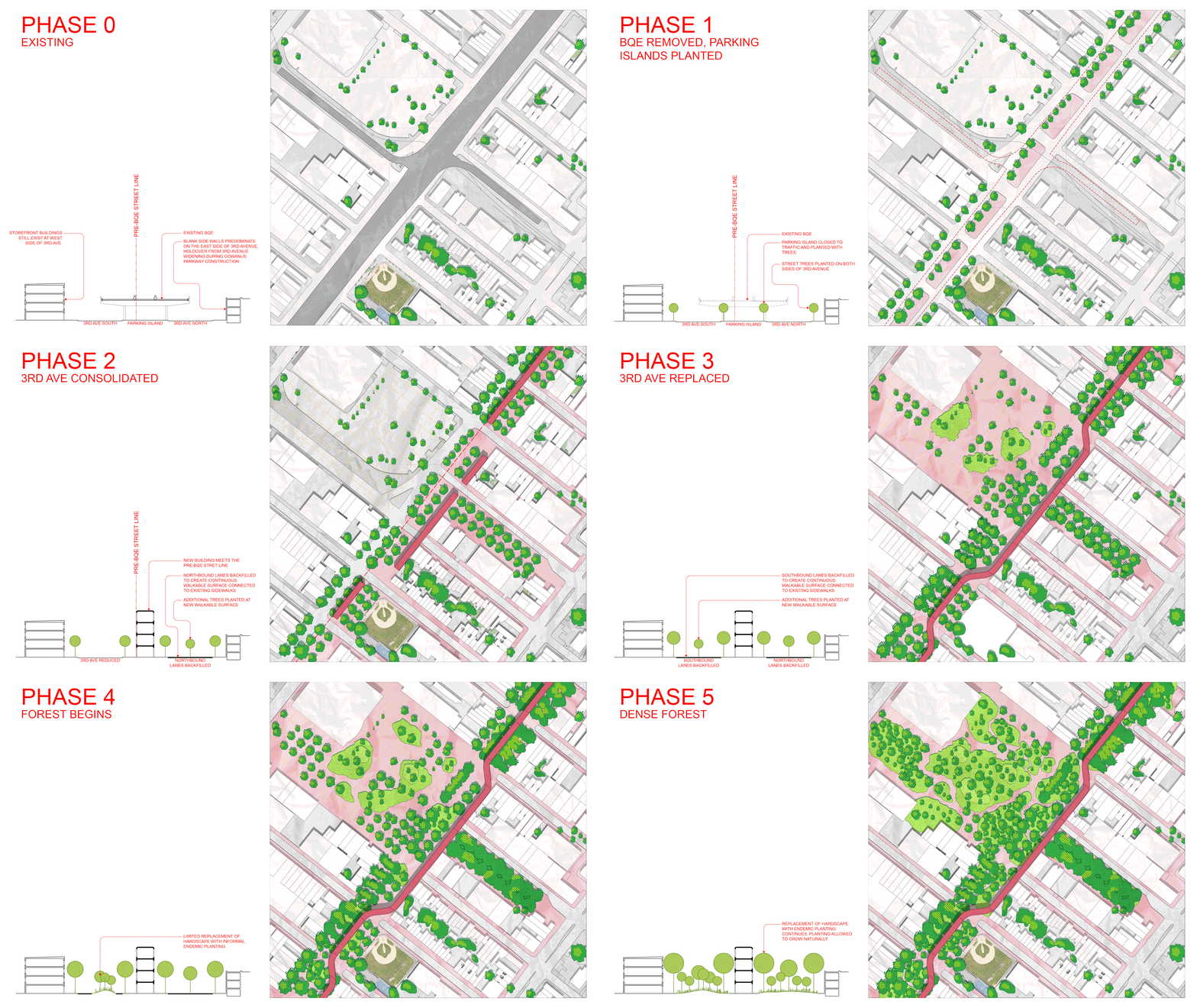
We envisioned the development process moving in reverse in the wake of the BQE’s disappearance, with the initial condition being recognizably urban and the end condition being a strip of untamed wilderness running through Brooklyn. We explored this idea through a series of sketches and concept collages.
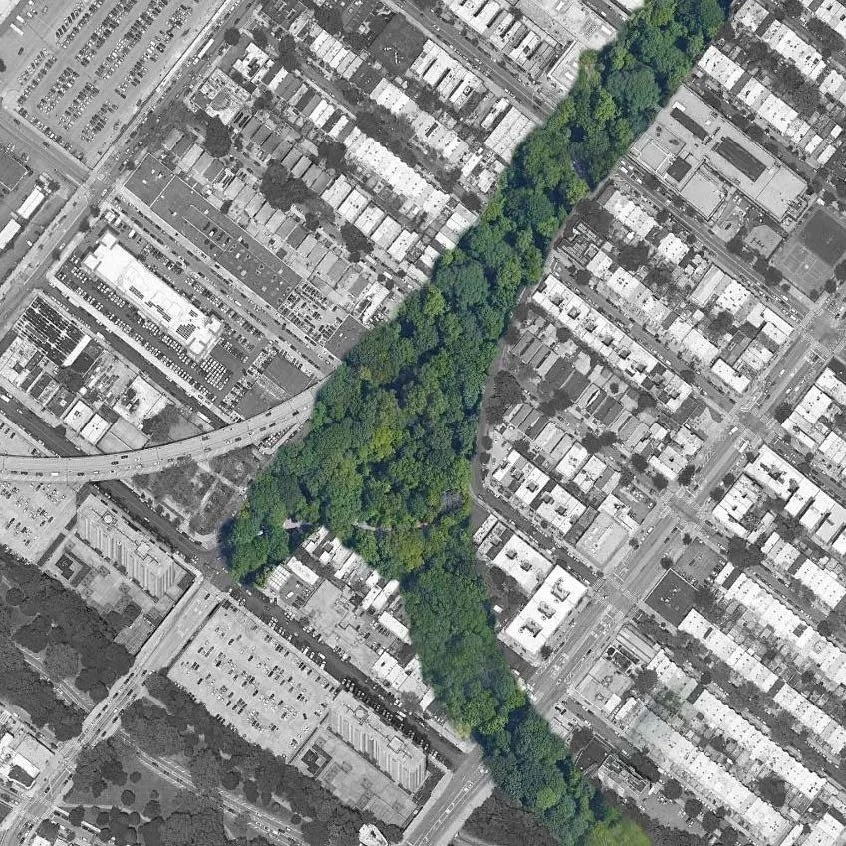
Concept collage: The BQE-Belt Parkway interchange reforested
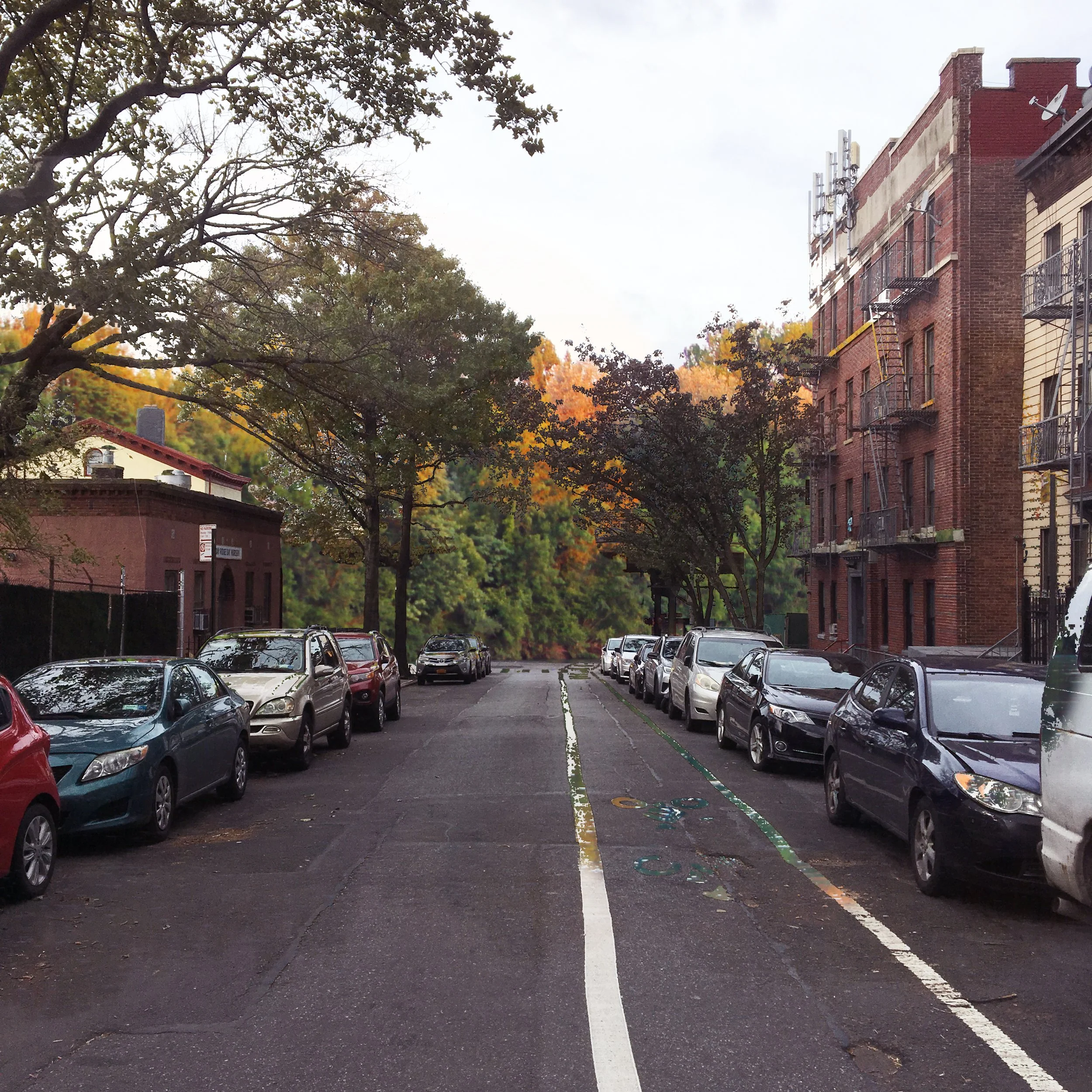
Concept collage: 3rd Avenue forest viewed from 44th street
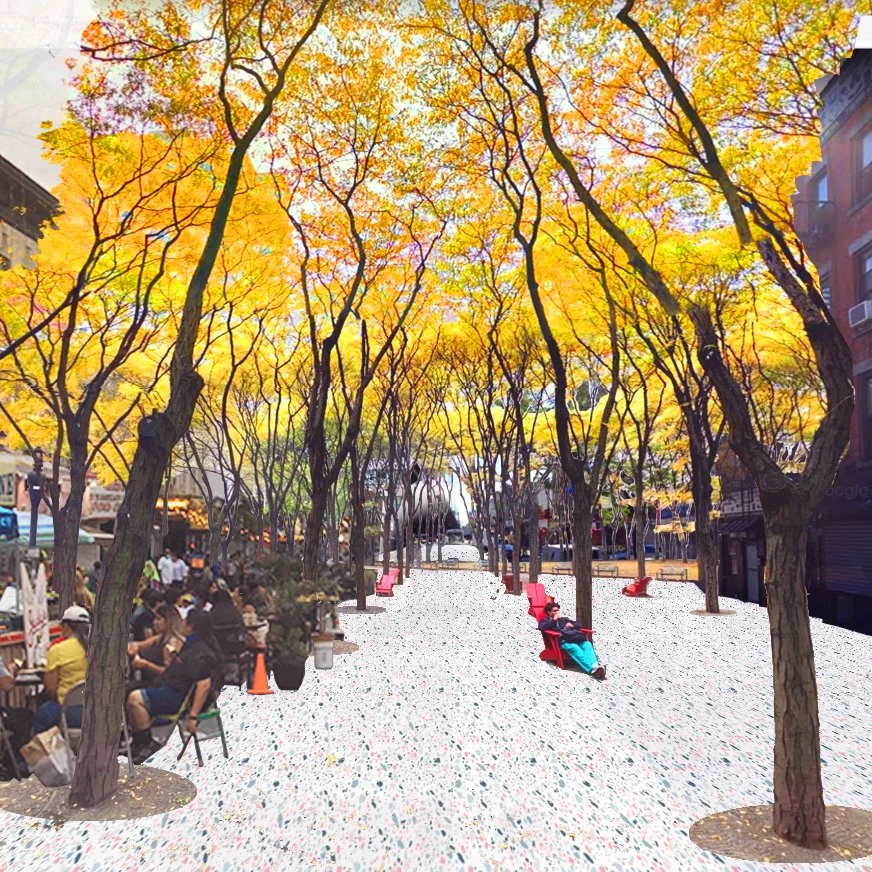
Concept collage: 3rd Avenue planted and occupied
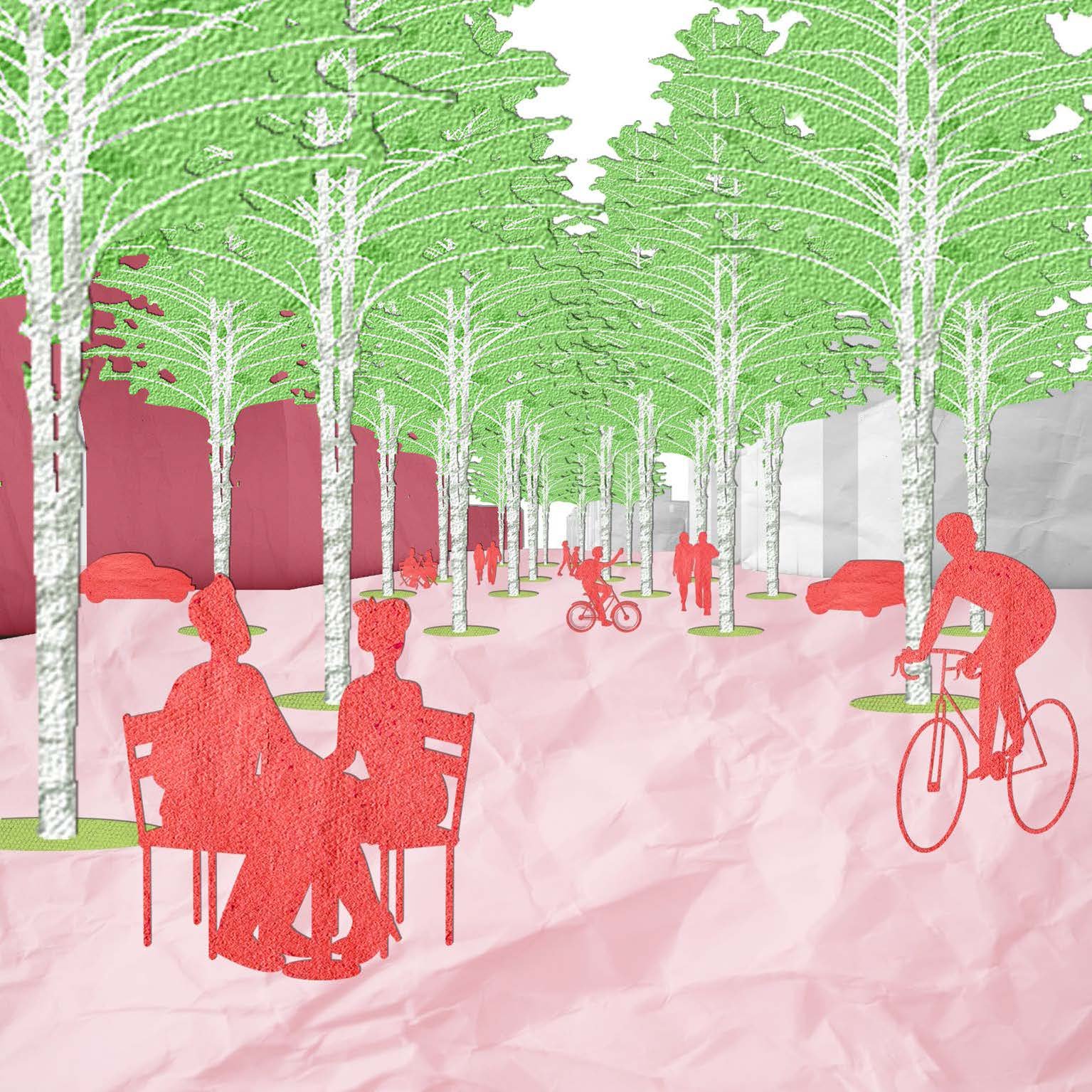
Concept collage: 3rd Avenue surface
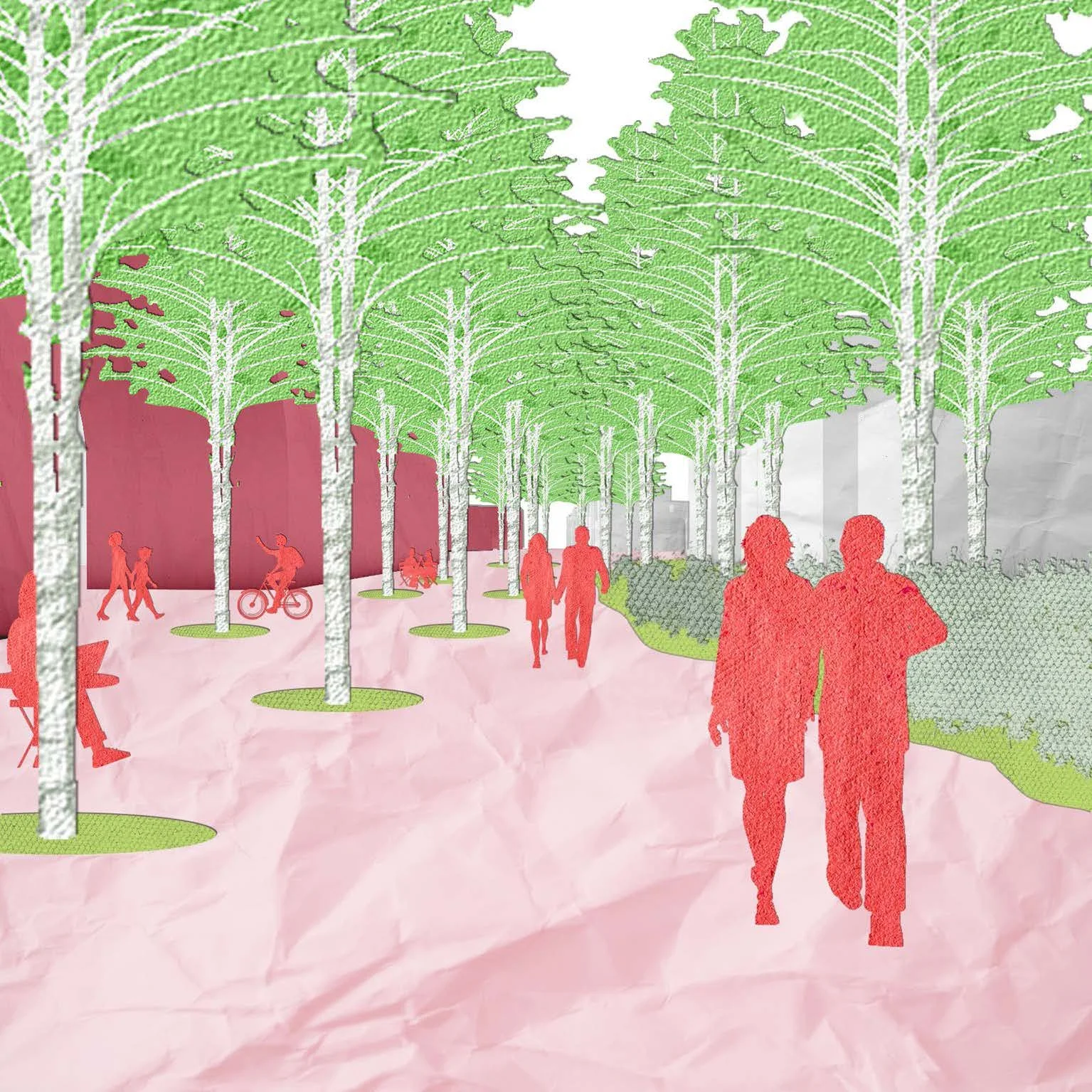
Concept collage: 3rd Avenue with forest starting to encroach
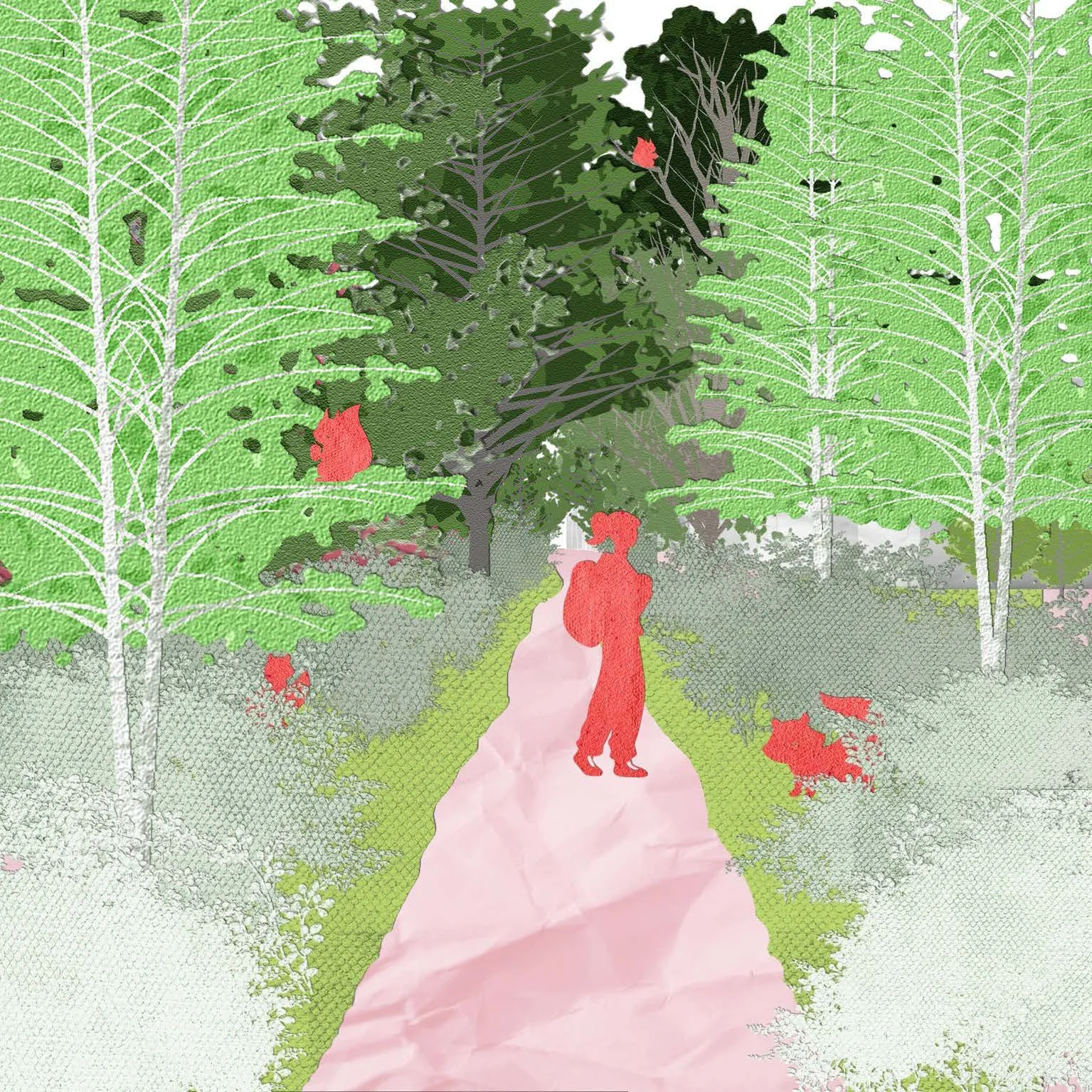
Concept collage: 3rd Avenue forest with critters
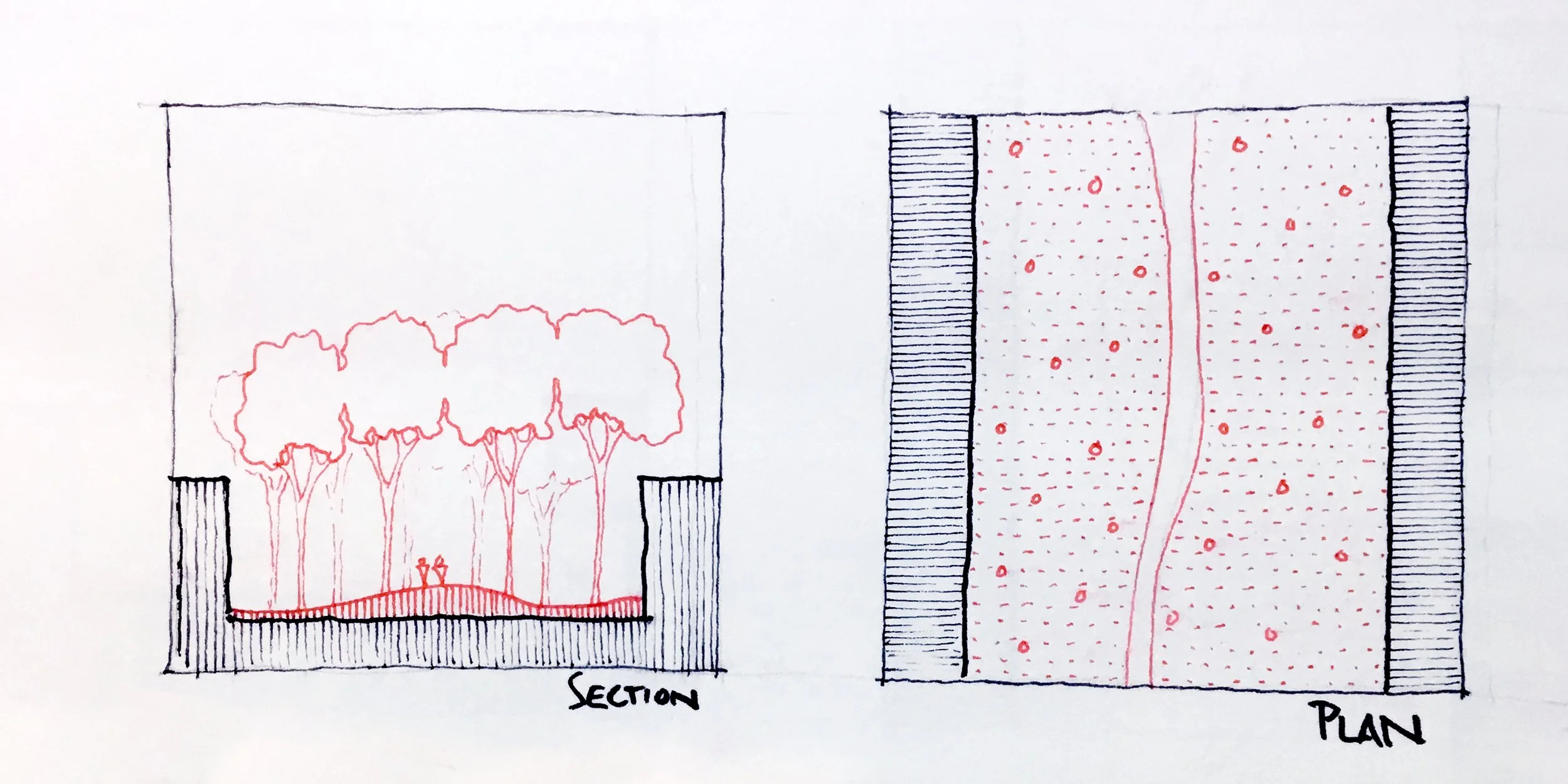
Concept sketches: 3rd Avenue as park with path
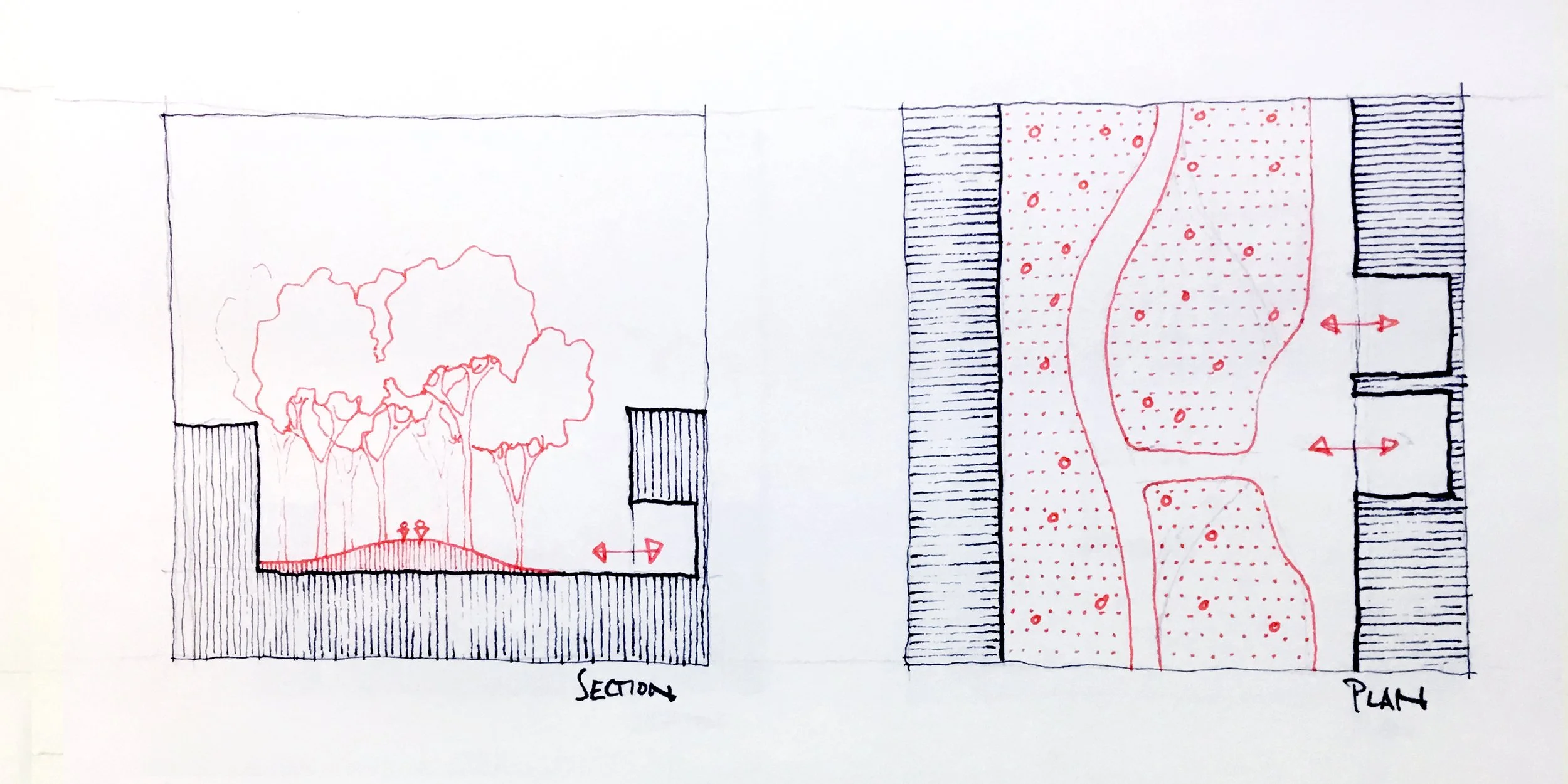
Concept sketches: 3rd Avenue park engaging existing fabric
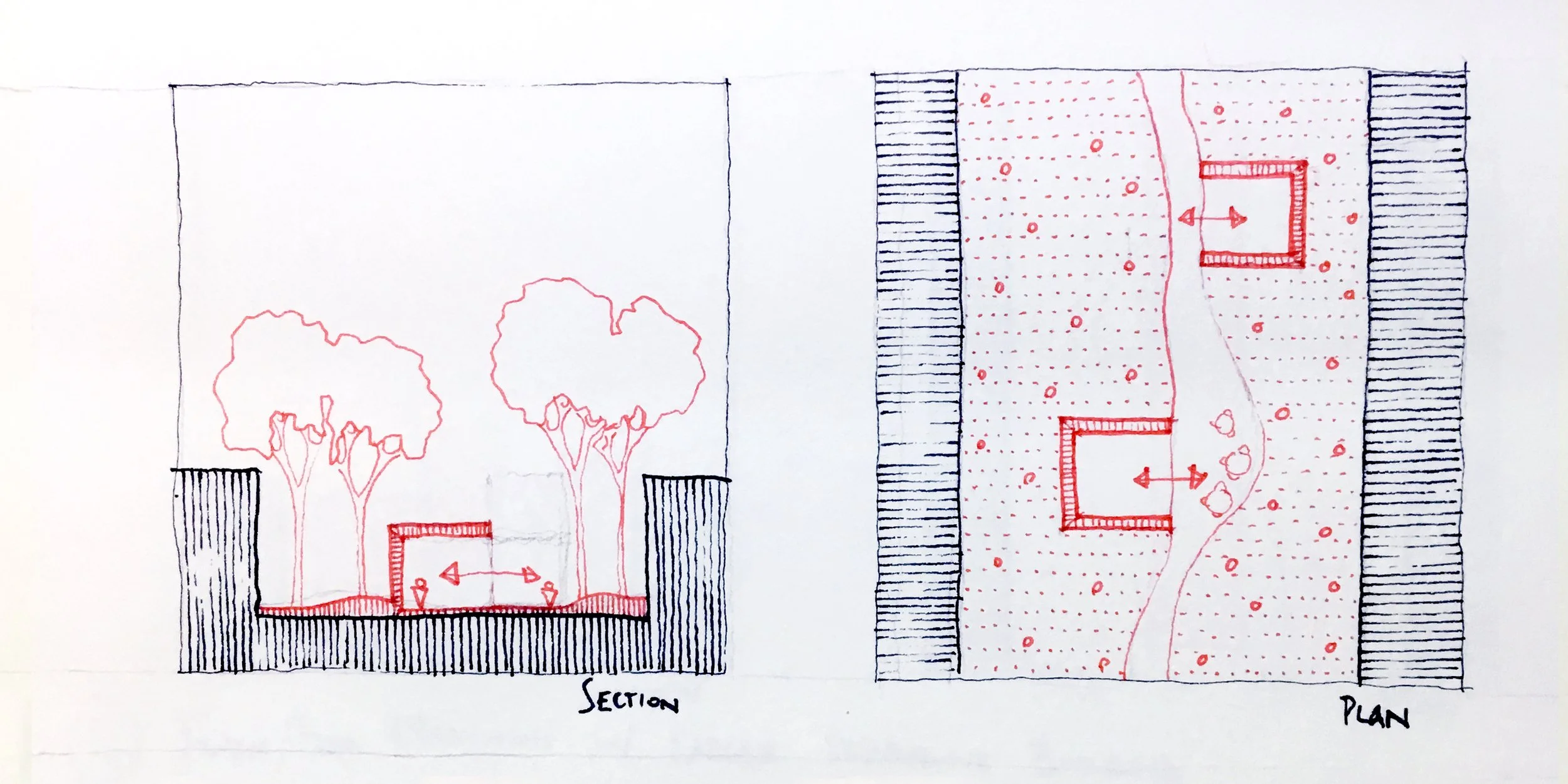
Concept sketches: park pavilions
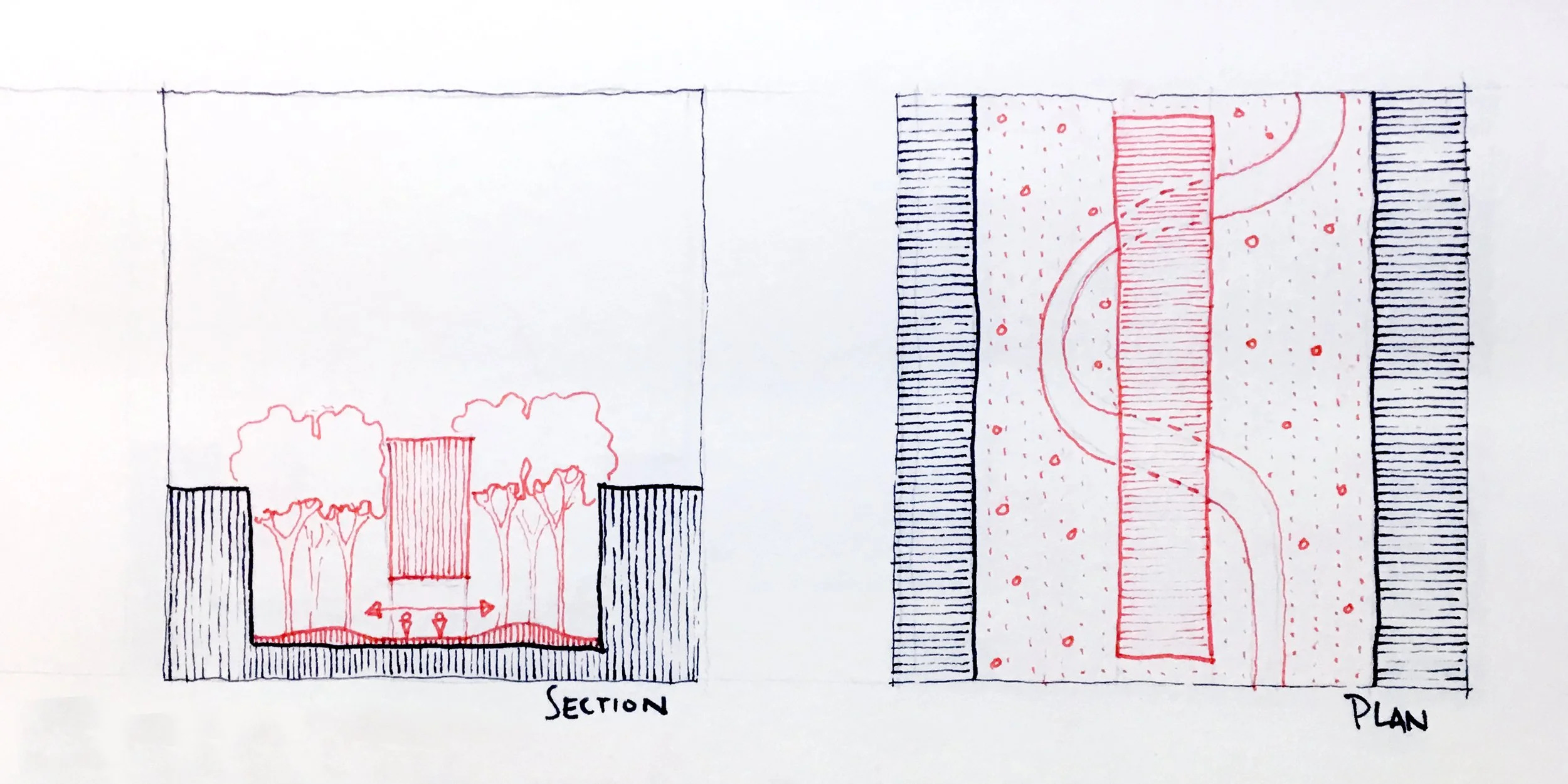
Concept sketches: new central building
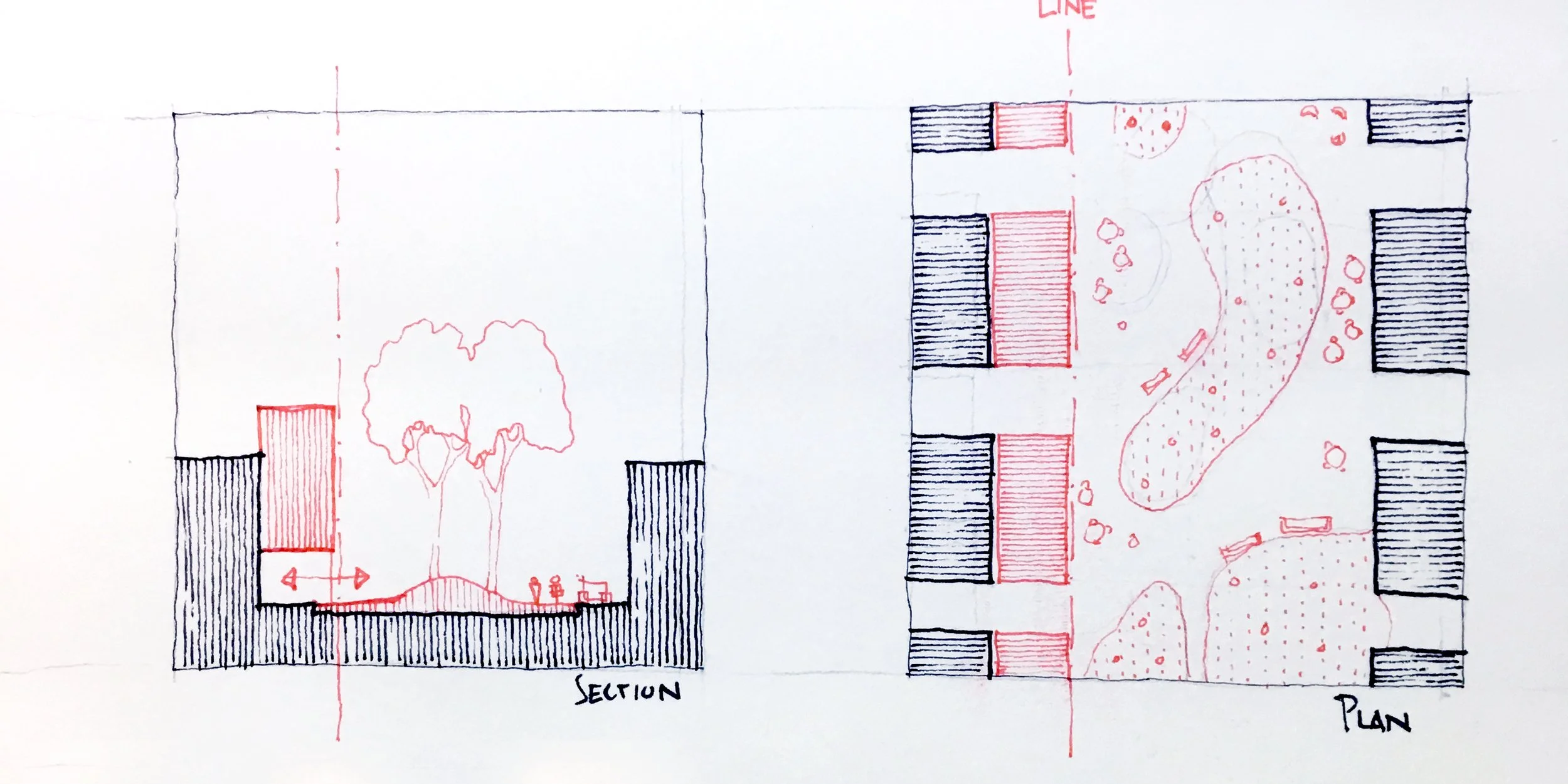
Concept sketches: New building to re-build the pre-BQE street wall
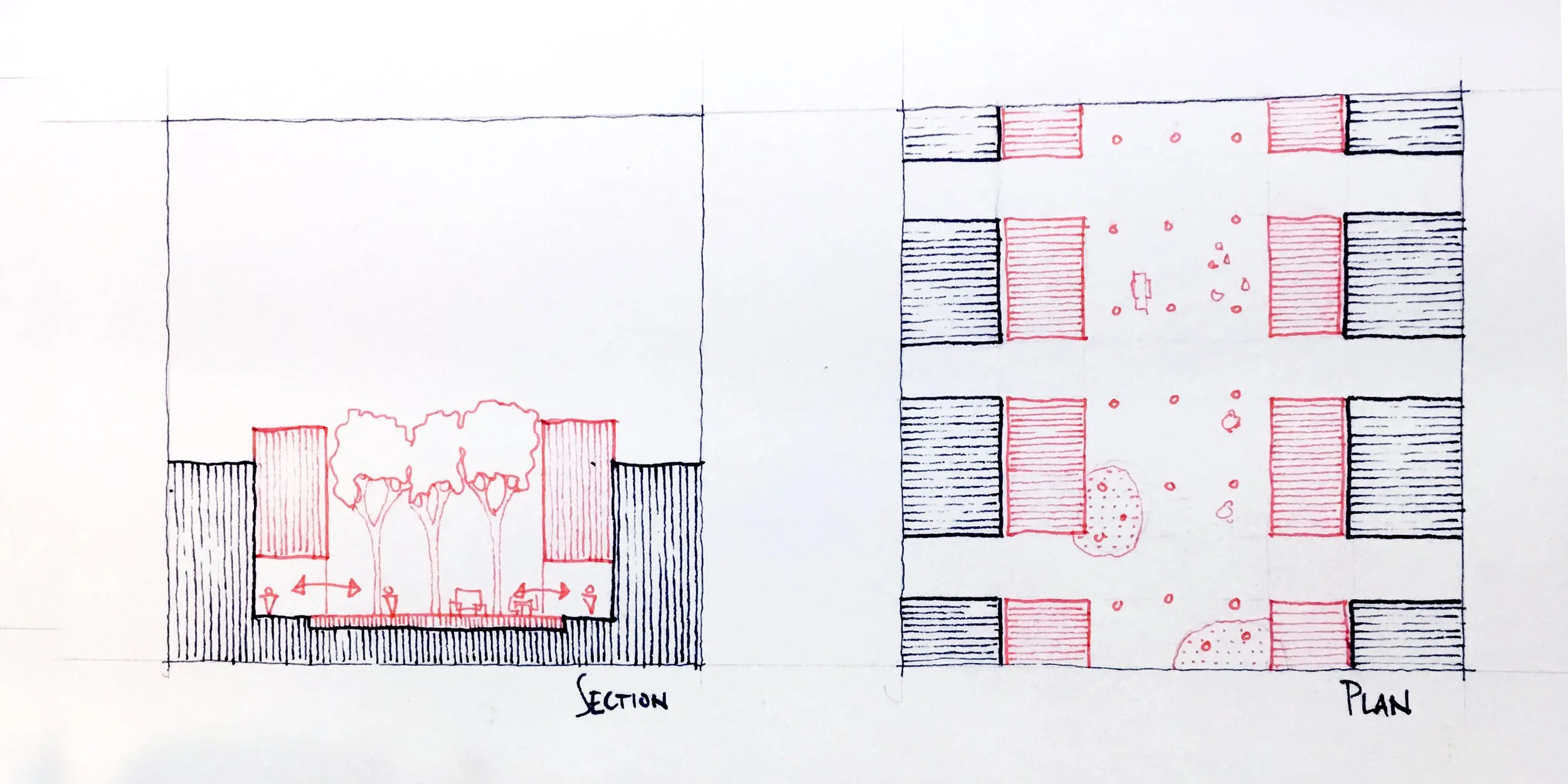
Concept sketches: New buildings at both sides of right-of-way
The study culminated in a conceptual framework for a post-BQE future.